Original Author : Earl Ofari Hutchinson
👉 Click here to read the article at the original site
Wave Production January 1, 2026
Mayor Karen Bass called the report “disturbing.” It was more, much more, than that. It was appalling.\
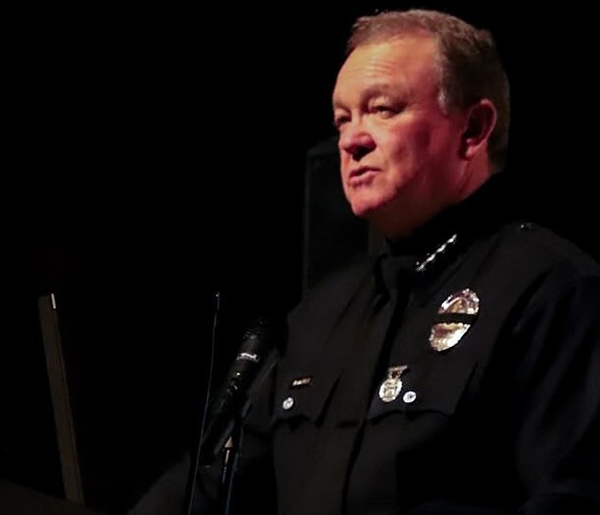
The LAPD’s Deadly Force Dilemma: A Pattern That Refuses to Fade
Adapted from commentary by Earl Ofari Hutchinson
When Mayor Karen Bass labeled the latest report on LAPD conduct “disturbing,” she was arguably understating the gravity of the situation. For many observers, the findings move beyond unsettling into the realm of the indefensible.
A Statistics of Violence
The Los Angeles Police Department consistently maintains a grim lead in national rankings for officer-involved shootings. This isn’t a one-time spike or a statistical outlier; it is a predictable, year-over-year reality. Despite the “hand-wringing” from the Police Commission, the Inspector General, and the Mayor’s office, the frequency of lethal encounters remains stubbornly high.
The data suggests a systemic reliance on ultimate force. Even in years where the total number of individuals shot decreased, the lethality of those encounters remained high. This raises a fundamental question: Why do these outcomes persist despite decades of oversight?
The Gap Between Policy and Practice
Since January 2020, California state law has mandated rigorous training and stricter accountability regarding the use of force. However, these legislative changes haven’t yielded the expected drop in casualties. Instead, we see a recurring cycle:
- The Subjective “Judgment Call”: Officers are legally permitted to use deadly force if they perceive a direct threat.
- The Shield of Immunity: Without “iron-clad” evidence of malice, officers are rarely prosecuted. In Los Angeles, it has been years since an officer faced criminal charges for an on-duty shooting, regardless of how “dubious” the circumstances appeared.
- The Escalation Trap: While the LAPD has access to non-lethal tools—including tasers, bean bags, and de-escalation tactics—any sudden movement by a suspect often results in a shift back to lethal firearms.
A Call for Fundamental Change
Studies, such as the 2011 National Institute of Justice report, prove that prioritizing non-lethal tools reduces injuries for both suspects and officers. Effective policing requires evaluating a suspect’s physical state, age, and actual capability before pulling a trigger.
The necessity of lethal force in many of these cases is, at best, questionable. For Chief McDonnell, the Police Commission, and Mayor Bass, the path forward must involve more than just “hard looks” and reports.
The Recommendation: Leadership should consider a moratorium on deadly force, restricted exclusively to instances of immediate, verified life-threatening danger.
This isn’t just about reform; it’s about public safety and the preservation of life. The message to the LAPD leadership is clear: the current rate of shootings is unsustainable and unacceptable.
Attribution: This article was adapted from original commentary by Earl Ofari Hutchinson, author, political analyst, and host of The Hutchinson Report.
Original Source: 👉 Click here to read the article at the original site